


MQLs vs SQLs: know your leads

simon • 2 February 2025

MQLs and SQLs: what's the difference? Learn all about this important aspect of sales and marketing.

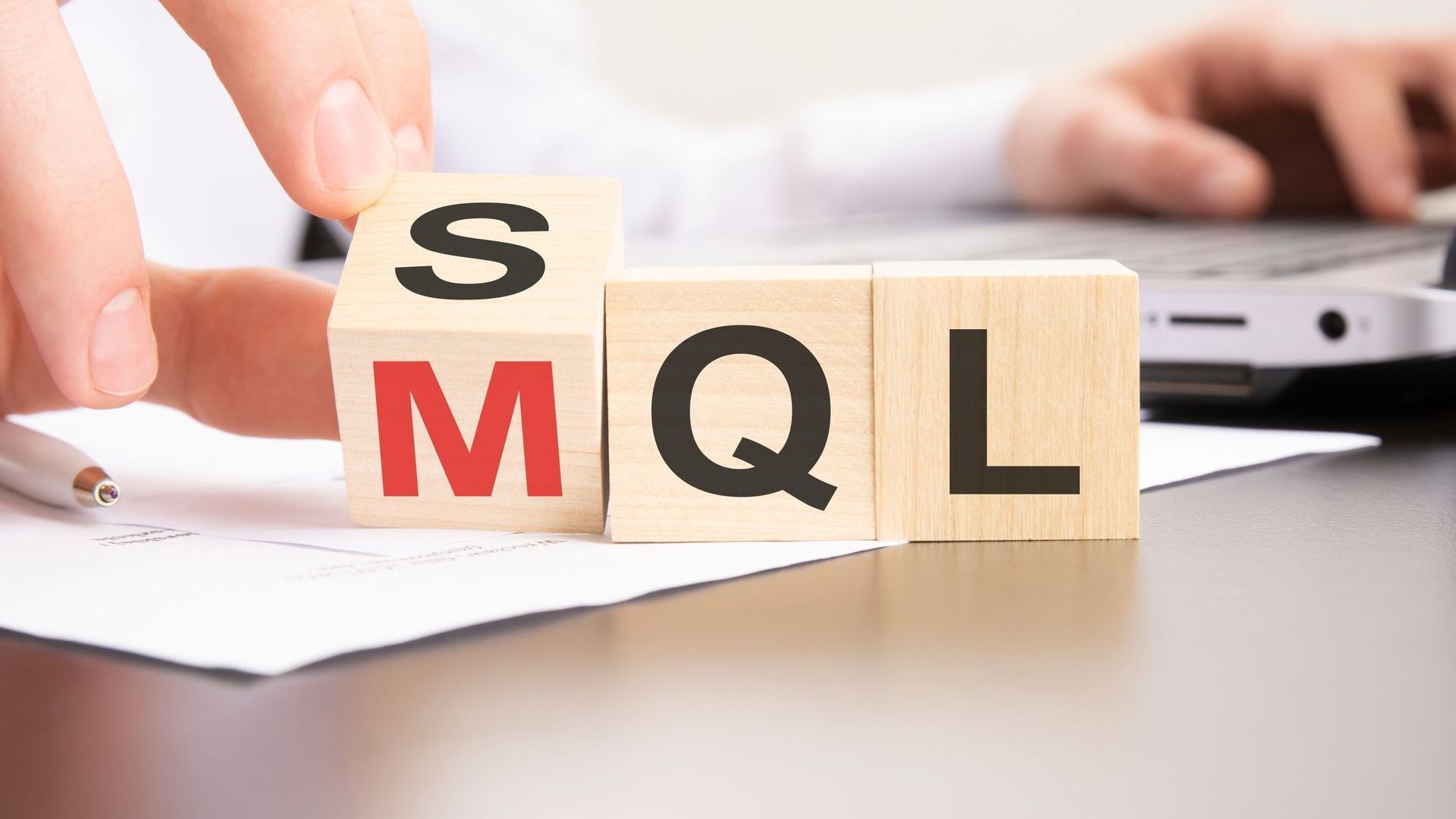
Wooden blocks spelling SQL on a desk with a hand arranging them near a laptop

If you're new to marketing, there are probably times when you feel like you're drowning in acronym soup. KPIs, SEO, PPC, MQLs… Can't we all just talk in plain English?
Well, sometimes jargon is unhelpful or plain exclusionary – a way of signalling to others that you work in a specialised field. But at other times, jargon is there to encode important differences of meaning.

MQLs and SQLs are examples of the latter. These two terms help to distinguish two types of sales leads. By making that distinction, you're in a better position to optimise your marketing and sales.

Leads are there for a reason. They can help you turn curious browsers into loyal, engaged customers. But you can't do that effectively if you lump all of them into one big mental bucket marked "sales".

In this article, we take a look at the difference between MQLS and SQLs. We also consider where each type of lead fits into the sales funnel and how you can turn an MQL into an SQL.

What's the difference?

MQL stands for "marketing-qualified lead". It refers to a person who's interested in your products or services. An SQL, by contrast, is a sales-qualified lead. This person is interested
and intends to buy.
To close a sale, you need those MQLs to turn into SQLs. But it's not always easy. If someone clicks on your Google ad or opens one of your emails, are they going to buy?

The answer is that you just don't know. Can you look at someone in the veg aisle at the supermarket and decide at a glance whether they're going to buy that radish or put it back on the shelf? No – and the same applies to leads in the digital space.

In practice, this means you need to communicate with MQLs and SQLs in different ways, with tailored outreach, ads and brand messaging.
What's an MQL?

An MQL is an individual or company that has engaged with your marketing. They've not yet put anything in their cart but they've interacted in some way.

Perhaps they've visited your website, downloaded a PDF or clicked on an ad. None of this signals purchasing intent but it does show interest – interest that, with the right amount of persuasion, can turn into a sale.

What's an SQL?

An SQL has been back for a second, third or fourth look. Perhaps they've downloaded case studies or pricing charts. It's clear that they're in the market for your service or product.

It's important to note that an SQL is still a lead, not a customer. They might never buy your product or service but instead move on to a competitor. This is why you need to target them effectively to maximise your chances of getting their custom.

Why is the difference important?

Let's take a real-world, offline example. Let's say you're in a coffee shop and a flyer catches your eye. Picking up and pocketing that flyer means you're interested but not committed. Scanning the QR code on the flyer or signing up to the mailing list suggests that you're committed (or just very, very bored).

The distinction is important because those two types of behaviour need to be nurtured in different ways. The casual flyer-pocketer needs to be convinced by the flyer to scan the QR code. The person who scans the QR code needs to be convinced to buy the product.
The same applies to marketing. Your MQL who clicks on your ad or visits your website needs to be coaxed, impressed and persuaded – but they don't need to be bombarded with the small print.

But your SQL who has engaged multiple times and shown purchasing intent needs that detail. Without it, they could throw their hands up and click away from your site.

Losing a customer isn't the end of the world. It's the nature of the online marketplace. Still, you should be doing everything you can to turn MQLs into SQLs and SQLs into sales. You can only do this with marketing that's tailored to each stage of the customer journey.

What is lead behaviour?

Lead behaviour covers all the ways a prospective customer engages with your brand.

A marketing agency will pull out behaviour analytics for you: things like the pages the lead has visited, the amount of time they've spent there and the forms they've filled out. You can then use this information to decide whether this MQL can be turned into an SQL.

What is lead scoring?

If you have just a handful of leads, it's possible to nurture each one individually. But if you have a lot to sift through, you can use something called "lead scoring" to rank them by their readiness to buy.

Typically, lead scoring will combine demographic and company information with email and social engagement levels. Once your lead hits a certain number of points, they're ready to get the hard sell.
Software exists to automate lead scoring. If it's something you're not sure about, it can be wise to outsource it to a marketing agency that knows its stuff.

How do you turn an MQL into an SQL?

Turning an MQL into an SQL is a fine art with one key ingredient: timing.

Try to sell too soon and you might put off a casual browser. But leave it too late and you lose a customer.

It isn't rocket science – but it does require a level of expertise that not every start-up or small business has. This is a key reason why it can be advisable to get a third-party marketing agency onboard to turn window shoppers into buyers. 

Final thoughts

Knowing the difference between MQLs and SQLs is an important step in learning how to boost your sales. But turning the one into the other requires patience and skill.

While you can get results with DIY sales, many small businesses find that outsourcing it to the experts is best. It means you can maximise your chances of success while focusing on the things that only you can do.

Is your sales pipeline dryer than the Serengeti? My Digital Hero's
AI lead generation engine uses cutting-edge automation to generate up to 1,000 MQLs per month. Book a free, no-obligation meeting and get that pipeline pumping again.


Share this article

Recent Posts

Dark blue podcast cover with MYDIGITALHERO logo, cartoon hero, and title: “The Metric Your Boss Cares About”
by Simon Edward 23 June 2026
Vanity metrics look great and change nothing. The real marketing ROI question: money in, money out. Here is how to measure what actually matters.
Blue promo graphic with MyDigitalHero logo and text “Your Website Is Lying to You,” showing a masked website figure.
by Simon Edward 15 June 2026
Your website looks fine to you because you built it. To a stranger it might be quietly costing you customers. Here is how to run a website audit and find out.
Blue marketing banner with cartoon character and text: “What a Marketing Manager Wishes They Could Tell You”
by Simon Edward 9 June 2026
How to Support a Stretched Marketing Manager Without Hiring | My Digital Hero
Dark blue marketing graphic with a caped hero and laptop; text reads “The Real Cost of Doing Your Own Marketing.”
by Simon Edward 1 June 2026
You are not saving money by doing your own marketing. You are hiding the cost from yourself. Here is the real maths, plus a free tool that scores your marketing out of 100.
SEO explainer graphic with Google search bar, upward arrows, and a cartoon robot on a blue background
by Simon Edward 25 April 2026
Understand SEO & its impact on your business. Get key strategies for success. Contact My Digital Hero for expert support!
Tech Stack Graveyard poster with a blue robot among tombstones on a purple night background
by Simon Edward 25 April 2026
Explore our interactive graveyard for dead tech like Adobe Flash & Internet Explorer. Join us in remembering the tech that shaped the web!