The Discovery Phase
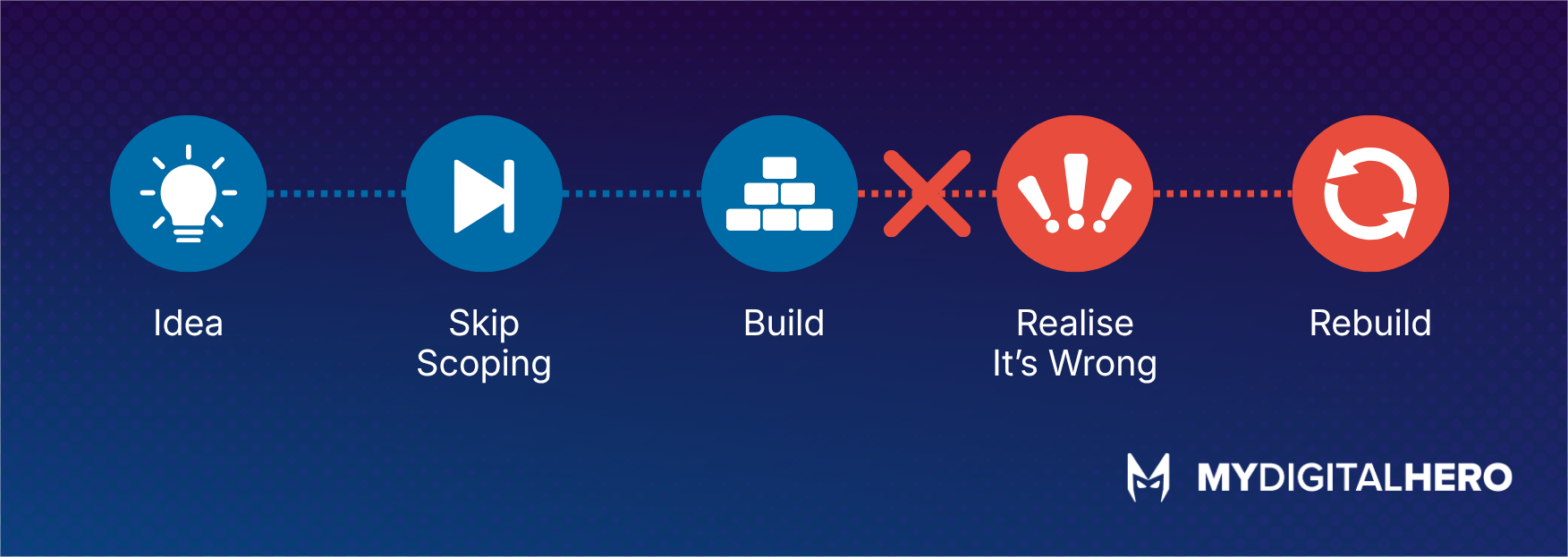
This is the middle step. Different agencies call it different things. Discovery. Scoping. Definition phase. Whatever the name, the purpose is the same: figure out exactly what needs to be built before anyone writes a line of code.
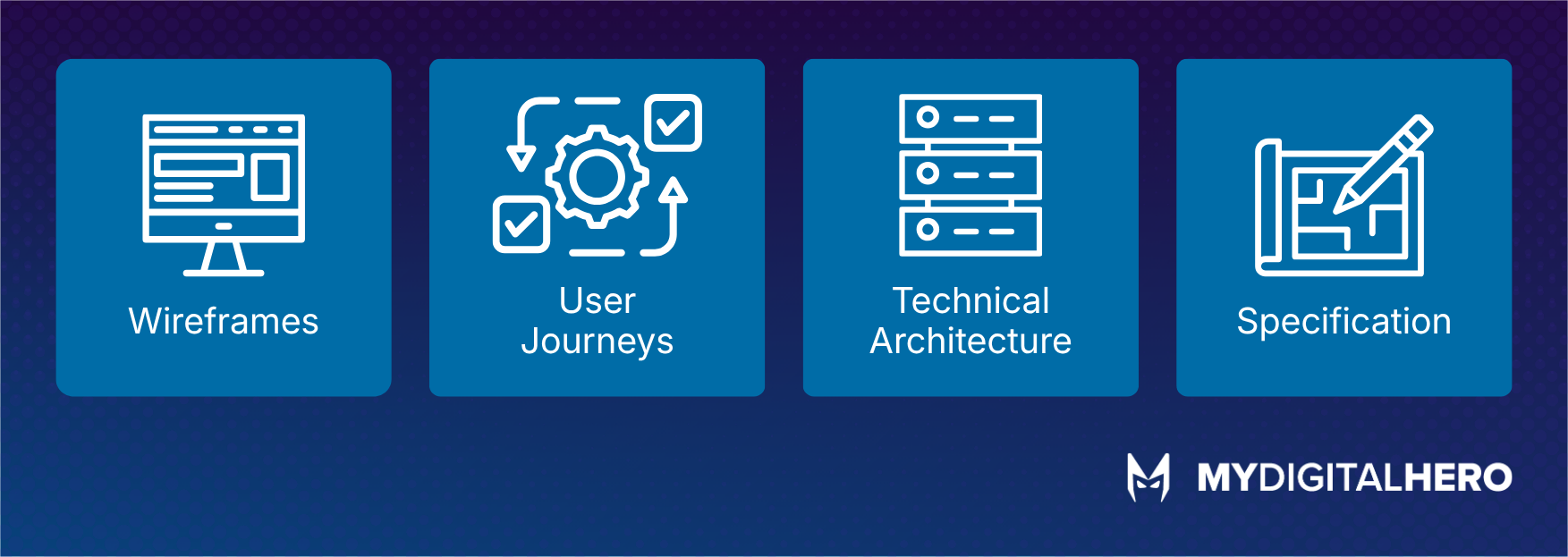
A proper discovery phase typically covers user research (talking to the people who'll actually use the thing), user journey mapping (the paths they'll take through the app), wireframing (rough visual layouts of every screen), technical architecture (how the system will be built, what it connects to, where the data lives), and a detailed specification document that both sides agree on.
It usually takes two to six weeks and costs between £2,000 and £6,000 depending on complexity. For a project that might cost £60,000 to £200,000 to build, that's a small price for certainty.
What You Get at the End
A document that says exactly what's being built. Not a vague brief. Not a "we'll figure it out as we go." A detailed specification that covers every screen, every feature, every integration, every user role, and every edge case the team has thought of.
This document becomes the contract between you and the agency. Both sides know what's being delivered, when, and for how much. Scope creep drops dramatically because the scope is defined. Surprises become rare because the surprises were found in discovery, not in development.
The Right Way to Phase a Project
No sensible app project should be built as one giant release. The risk is too high, the feedback loop is too slow, and the cost of getting it wrong is too painful.
The approach that works, consistently, is phased delivery.
Phase one is discovery and design. Wireframes, user journeys, technical architecture. The thinking phase.
Phase two is the core build. The MVP. The minimum set of features that makes the app functional and testable. This is what you launch first. Not everything. Just enough to validate the concept with real users.
Phase three is extended features. The secondary features, integrations, and enhancements that build on the validated core. Each feature is prioritised by user feedback and business value.
Phase four is testing and launch. Proper QA, security testing, performance testing, and deployment. If the app handles payments or sensitive data, this phase includes compliance work.
Phase five is post-launch. Monitoring, bug fixes, iteration based on real user data. The app keeps getting better because real people are using it and their behaviour tells you what to build next.