5 Things Killing Your Website Right Now

Simon Edward • 25 April 2026

Your website is the first impression most people will ever have of your business. And right now, there's a reasonable chance it's making that impression badly.


Not because it looks terrible. Most modern websites look fine. The problems are the ones you can't see by looking at it. They're in the code, the speed, the structure, and the invisible decisions that were made (or not made) when it was built.


Here are the five most common things we see killing otherwise decent websites. And at the bottom, there's a free tool to check yours.

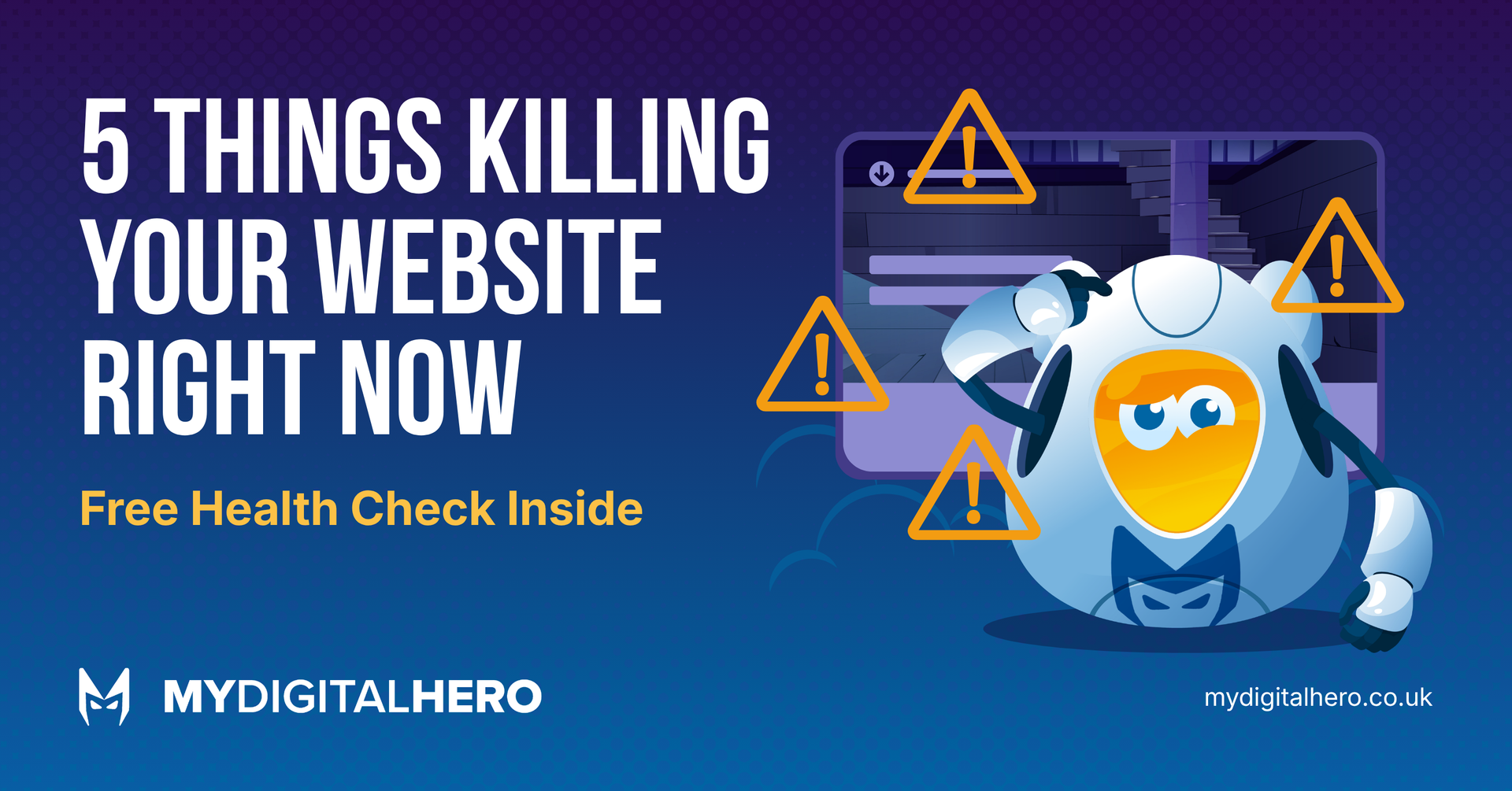
Blue marketing banner: “5 Things Killing Your Website Right Now” with warning icons and cartoon website mascot.

1. It's Slow


This is the big one. If your website takes more than three seconds to load, you're losing visitors before they see a single word of your content. Not some visitors. A significant percentage.


Google has been clear about this for years. Page speed is a ranking factor. Slow sites rank lower. But more importantly, slow sites frustrate real people. Someone clicks a link from Google, waits three seconds, sees a blank screen, and hits the back button. They're gone. They're on your competitor's site. They're not coming back.


The most common causes of slow websites: oversized images that haven't been compressed, cheap hosting, bloated code from page builders that load dozens of scripts you don't need, and no caching.


The fix isn't always complicated. Sometimes it's as simple as compressing your images and switching to better hosting. Sometimes it requires a proper rebuild. Either way, it's worth knowing where you stand.


Orange speedometer with small user icons on blue background, suggesting team performance or metrics.

2. It's Not Built for Mobile


More than half of all web traffic in the UK comes from mobile devices. For some industries, it's closer to 70 percent. If your website doesn't work properly on a phone, the majority of your visitors are having a bad experience.


"Works on mobile" doesn't just mean "it loads." It means the text is readable without zooming, the buttons are big enough to tap, the navigation makes sense on a small screen, and the page doesn't jump around while it loads.


Google has been using mobile-first indexing for years now, which means it primarily looks at the mobile version of your site when deciding how to rank you. A site that looks great on desktop but breaks on mobile is actively being penalised.


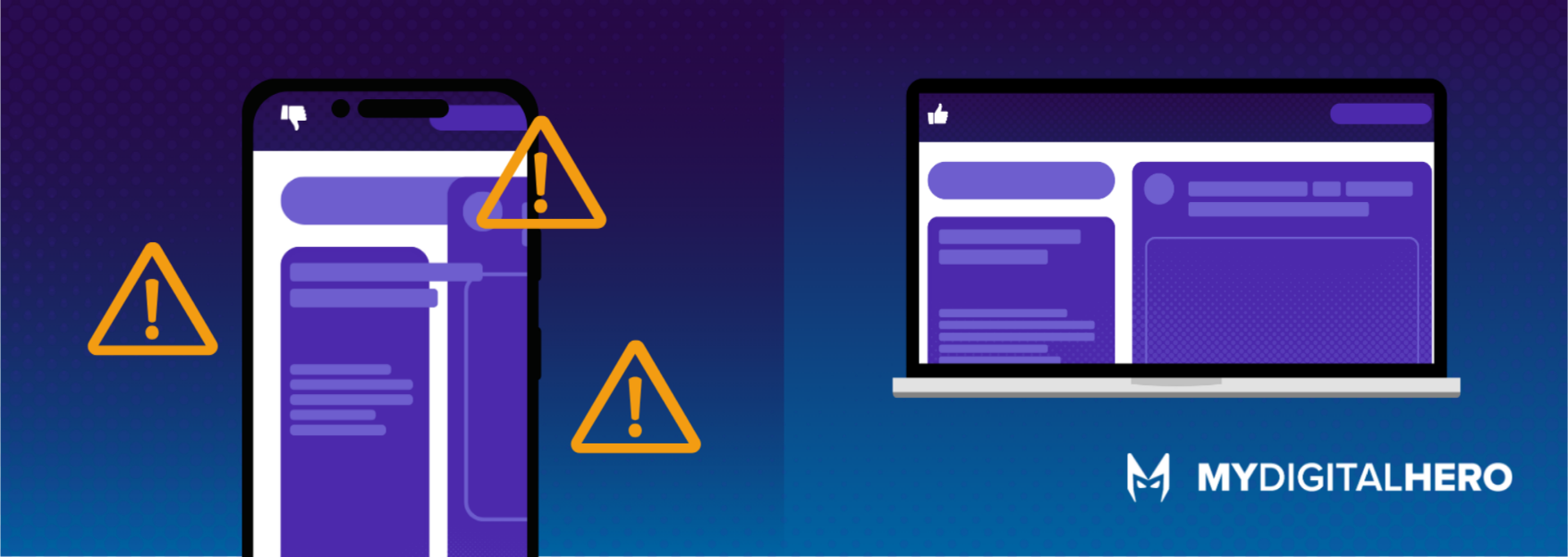
Illustration of a phone and laptop with warning icons, suggesting website or app security issues

3. Your SEO Basics Are Wrong (or Missing)


You don't need to be an SEO expert to get the basics right. But you'd be surprised how many websites get them wrong.


Title tags that don't describe the page. Meta descriptions that are blank. Heading tags used for styling instead of structure. Images with no alt text. Pages that aren't indexed because of a stray noindex tag that nobody noticed.


These things individually are small. Collectively, they add up to Google not really understanding what your website is about. And if Google doesn't understand you, it can't rank you.


The frustrating thing is that most of these are easy to fix once you know they exist. The problem is that most people don't know they exist.


4. There's No Clear Path to Conversion


Your website looks nice. It loads quickly. It ranks well. People visit. And then nothing happens.


This is the conversion problem. Visitors arrive but there's no clear next step. No prominent call to action. No obvious way to get in touch, request a quote, or take whatever action you need them to take.


Every page on your website should answer one question for the visitor: what do I do next? If the answer isn't obvious within five seconds, you've lost them.


Common conversion killers: contact forms buried at the bottom of a page nobody scrolls to, phone numbers that aren't clickable on mobile, "Get in Touch" buttons that lead to a generic contact page with no context, and no calls to action on blog posts.


5. The Content Hasn't Been Updated Since It Was Built


A website isn't a brochure you print once and hand out for three years. It's a living thing. Search engines favour fresh, regularly updated content. Visitors trust businesses that clearly maintain their online presence.


If your most recent blog post is from 2023 and your footer still says "Copyright 2022," that tells visitors something. It tells them you either don't care about your website or you're not really active as a business. Neither is the impression you want to make.


Regular content (even a blog post a month) signals to Google that your site is alive and maintained. It also gives you something to share on social media, something to rank for in search results, and a reason for people to come back.



Blue banner reading “CHECK YOUR WEBSITE” with a “FREE” burst and a cartoon mascot on the right.

Check Yours for Free


We built a tool that checks your website's health in seconds. Enter your URL and get a breakdown of performance, SEO health, and technical issues. It's free, it's instant, and it might tell you things about your website that nobody else has.


If the results make you wince, don't panic. Most of these problems are fixable. And if you'd rather someone else fixed them, that's exactly what we do.

Share this article

Recent Posts

SEO explainer graphic with Google search bar, upward arrows, and a cartoon robot on a blue background
by Simon Edward 25 April 2026
Understand SEO & its impact on your business. Get key strategies for success. Contact My Digital Hero for expert support!
Tech Stack Graveyard poster with a blue robot among tombstones on a purple night background
by Simon Edward 25 April 2026
Explore our interactive graveyard for dead tech like Adobe Flash & Internet Explorer. Join us in remembering the tech that shaped the web!
Infographic comparing native app, web app, and website with colorful circles and a cartoon robot mascot
by Simon Edward 25 April 2026
Understand the differences between native apps, web apps & websites. Choose the right solution for your business needs today!
Blue infographic with a cartoon owl and six coin icons, titled “The 6 Types of Business Owner We Meet.”
25 April 2026
Identify 6 business owner types & discover how a marketing partner can boost your growth. Contact us for tailored solutions!
Blue marketing infographic with the title “10 Reasons Not to Do Marketing” and a cartoon character holding a 10 sign
by Simon Edward 25 April 2026
Explore why avoiding marketing is harmful for businesses. Contact us to enhance your marketing strategy today!
Abstract multicolor gradient background in green, blue, and purple tones
by Simon Edward 25 April 2026
Avoid costly app development errors by defining your project clearly. Invest in a thorough discovery phase for success.