





How to Know If Your Marketing Is Actually Working
You're spending money on marketing. Maybe a lot. Maybe not enough. Either way, at some point someone in the business (probably you) asks the question: is this actually working?
And the honest answer for most businesses is: they don't really know.
They have a vague sense that "things are going well" or "we seem to be getting some leads," but if you pressed them for specifics, the data gets thin quickly. They can't tell you which channel is driving results, what their cost per lead is, or whether the money they spent last month made them more money than it cost.
This isn't a criticism. It's the reality for most small businesses. Marketing measurement is treated as something you'll "sort out later," and later never comes.
Here's how to fix that.

Start with the Only Question That Matters
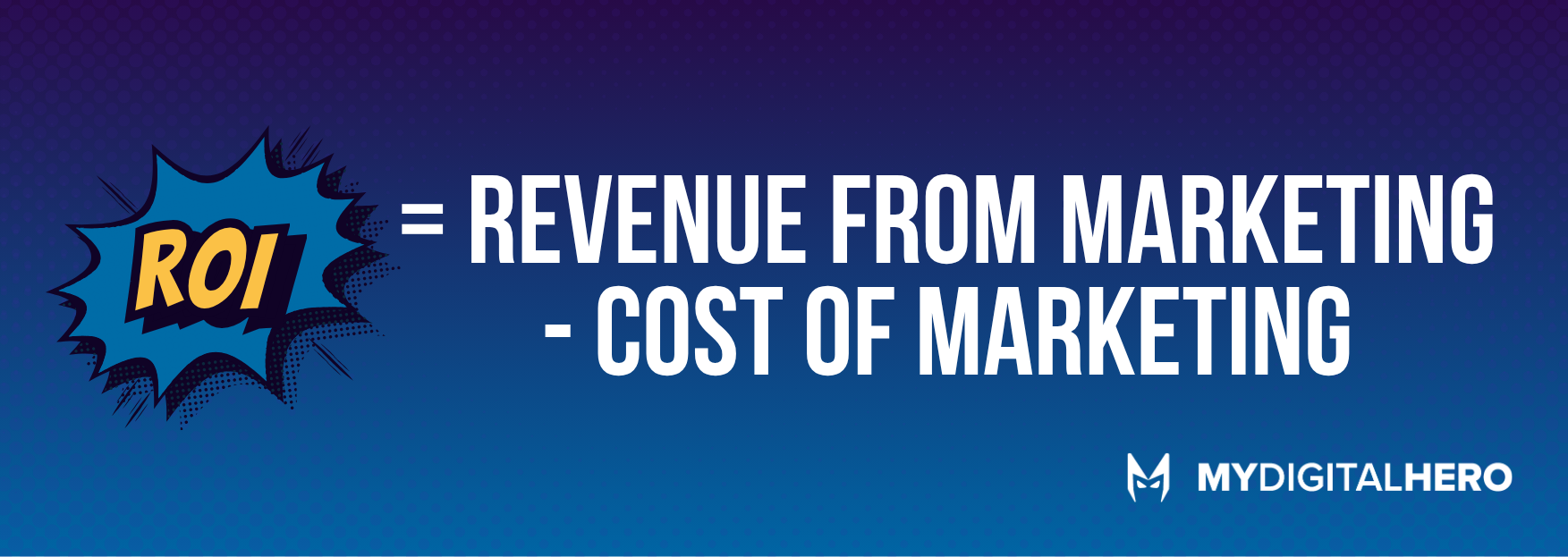
Forget impressions, reach, followers, and engagement for a moment. The only question that matters is: did we make more money than we spent?
That's your return on investment. Your ROI. Everything else is a supporting metric that helps explain the ROI number.
If you spent £5,000 on marketing last month and it generated £25,000 in revenue that wouldn't have happened otherwise, your ROI is 400 percent. That's good. If you spent £5,000 and can't point to a single new customer, something needs to change.
The challenge is attribution. Most customers don't follow a neat, linear path. They might see a social media post, Google you later, read a blog, then call you three weeks after that. Working out which activity deserves the credit is genuinely difficult. But difficult isn't the same as impossible, and having imperfect measurement is infinitely better than having none.

The Numbers Worth Tracking
You don't need a dashboard with 47 metrics. You need a handful of numbers that tell you what's actually happening.
Leads per month. How many enquiries are you getting? Track the trend over time, not just the absolute number. Is it going up, down, or flat?
Cost per lead. Divide your total marketing spend by the number of leads you got. If you spent £3,000 and got 15 leads, your cost per lead is £200. Is that good? It depends on what a customer is worth to you (see next point).
Customer lifetime value. How much is a customer worth over the entire time they stay with you? A customer who buys once for £500 is very different from one who spends £200 a month for three years. Your cost per lead needs to make sense relative to this number.
Conversion rate. What percentage of website visitors become leads? What percentage of leads become customers? These are the two most important conversion rates. Small improvements here have outsized impact.
Traffic by source. Where are your website visitors coming from? Google search, paid ads, social media, direct, referral? This tells you which channels are doing the heavy lifting and which are dead weight.

The Warning Signs That It's Not Working
Sometimes the data is clear. Other times, the signs are more subtle.
Your website traffic is flat or declining month on month. You're spending on Google Ads but can't see the leads in your CRM. Your social media follower count is growing but enquiries aren't. You redesigned your website six months ago and nothing changed. Your marketing person or agency can't give you clear numbers when you ask.
None of these mean your marketing is definitely failing. But they're all signals worth investigating rather than ignoring.
The Things That Take Time (and That's Fine)
SEO doesn't produce results in week one. Content marketing builds momentum over months, not days. Brand awareness is difficult to measure in the short term but unmistakable over the long term.
The key is knowing which activities are long-term investments (SEO, content, brand) and which should produce measurable results quickly (paid ads, email campaigns, lead generation). Judge them by the right timeframe or you'll cut things that are working and keep things that aren't.
A good rule of thumb: paid advertising should show measurable results within the first month. SEO should show meaningful movement within three to six months. Content marketing compounds over six to twelve months.

Score Yours for Free
We built the Marketing MOT specifically for this question. It checks your marketing across eight categories, gives you a score out of 100, shows pass/advisory/fail ratings for each area, calculates the hidden cost of your time, and compares you to industry benchmarks.
It takes about three minutes. No email, no data collected, just an honest score.
If you want to go deeper, a proper marketing audit with our team covers everything the tool does and a lot more. But the MOT is a solid starting point.